ServicesHardwood Flooring
Hardwood Flooring in Jersey Village
When a leak or storm leaves boards cupped and stained, we help you decide what can stay and what must go. Then we install new solid or engineered hardwood over a subfloor that is dry, flat and ready for it.
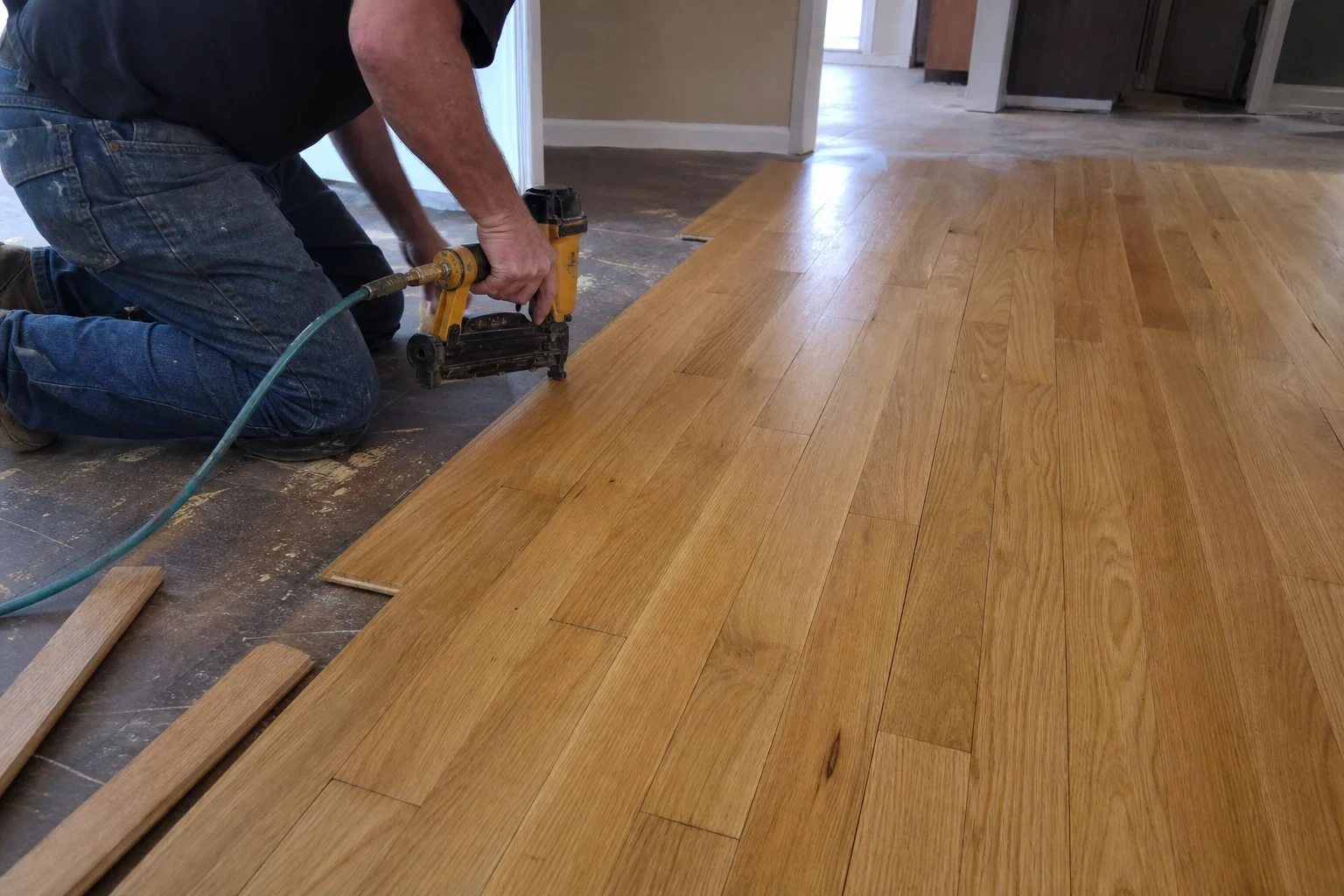
New hardwood, laid on a sound foundation
Hardwood is real wood, and it moves with moisture. After a burst supply line, a roof leak or water tracked in during a heavy storm, boards swell at the edges, cup, then sometimes crown as they dry. Laying new wood over a floor that still holds water simply repeats the problem.
Our work starts underneath. We check the slab or plywood with a meter, find where the water went and tell you plainly whether a section can be patched in or whether the room needs a full replacement. Most houses around Jersey Village sit on concrete slabs, which usually points toward engineered hardwood, glued down or floated. Solid hardwood stays a fine choice over a wood subfloor.
If water is not the reason you are calling, the same care applies to a planned upgrade from carpet or tired laminate.
What a hardwood installation includes
Moisture readings first
We test the subfloor and, on slabs, the concrete itself before anything is ordered. You see the readings, and we explain what they mean for timing.
Removal of damaged flooring
We pull up ruined boards, padding or old flooring, cut out wet underlayment and haul it away. Photos of what we find go to you, which helps if you are filing an insurance claim.
Subfloor correction
High spots are ground down and low spots filled so the new floor lies flat. A moisture barrier goes down where the slab calls for one.
Matching or a fresh start
For partial repairs we look for a species, width and finish that blend with the boards that survived. When a close match is not realistic, we say so before work begins.
Installation and trim
Boards are nailed, glued or floated to suit your subfloor, with expansion gaps at the walls. Baseboards, quarter round and transitions to tile or carpet are fitted and finished cleanly.
Signs your hardwood needs attention
Cupped or crowned boards
Edges higher than the centers, or the reverse, mean moisture got under or into the wood. It rarely flattens fully on its own.
Dark stains near doors or appliances
Gray or black patches around a dishwasher, refrigerator line or exterior door often mark long-term water exposure and possible rot below.
Soft or springy spots
A floor that gives underfoot may have a damaged subfloor. That needs to be opened up and checked before any new wood goes in.
Gaps after a wet stretch
Boards that swelled during a humid, rainy season and then shrank can leave wide gaps and loose planks.
A musty smell that lingers
Odor after a leak was cleaned up can mean water is still trapped beneath the floor.
How the work goes
- 1
The first conversation
You tell us what happened and which rooms are affected. We arrange a visit to see the floor and take moisture readings.
- 2
A clear recommendation
We explain whether repair or replacement makes sense and why, then give you a written estimate broken out by removal, subfloor work, materials and installation.
- 3
Acclimation and prep
New wood is delivered to your home ahead of installation so it settles to indoor humidity. Meanwhile we remove the old floor and prepare the subfloor.
- 4
Installation day
We protect nearby rooms, install the floor and fit the trim. Most rooms are walkable the same day, though glue-down floors may need a short wait before furniture goes back.
- 5
Walkthrough and cleanup
We sweep up, remove debris and walk the floor with you so you know how to care for it through Houston-area humidity.
What shapes the cost of hardwood
Two hardwood jobs of the same size can price very differently, mostly because of what sits under the old floor. After we talk by phone and see the rooms, you get a written estimate with each part listed, so nothing appears later as a surprise.
- Subfloor condition
- Dry, flat concrete costs little to prepare. Wet plywood, rot or an uneven slab adds removal, drying time and leveling.
- Species and construction
- Oak, hickory and maple carry different prices, and engineered boards differ by wear layer thickness. Wider planks also cost more.
- Installation method
- Nail-down, glue-down and floating installs use different labor and materials. Your subfloor largely decides which one fits.
- Removal and disposal
- Tearing out glued hardwood or tile takes longer than lifting carpet. Water-damaged material may also need extra handling.
- Layout and rooms
- Open, rectangular rooms go quickly. Closets, angled walls, stairs and many transitions add cutting time.
Hardwood flooring questions
Something not covered here? (346) 588-7323
Can you replace just the damaged boards?
Often, yes, if the damage is contained and we can find boards that match closely in species, width and finish. Older floors may have faded or ambered, so a patch can show. We will tell you honestly whether a partial repair will look right or whether a full room makes more sense.
Should I choose solid or engineered hardwood?
On a concrete slab, engineered hardwood is usually the better fit because its layered core resists movement from moisture and humidity. Solid hardwood works well over a dry plywood subfloor. We explain the tradeoffs for your specific rooms.
How long should I wait after a leak before new floors go in?
Until the subfloor tests dry, which can take days or longer depending on how much water there was. We take readings rather than guess. Installing too early is the most common reason replacement floors fail.
Will you work with my insurance company?
We are not adjusters, but we can document what we find with photos and readings and provide a written estimate you can share with your insurer. Many homeowners find that makes the claim easier to explain.
Does wood hold up in a kitchen?
Plenty of kitchens keep wood floors for years, as long as spills get wiped up promptly and someone keeps an eye on the sink and dishwasher. A slow drip from a dishwasher line, left unnoticed, is one of the usual ways kitchen boards get ruined. Where a kitchen sees heavy water use, we may point you toward luxury vinyl plank or tile flooring in that room and carry hardwood through the living areas.
Let's look at your floor together
Tell us what happened to your hardwood, or what you hope to replace. We will take readings, explain your options and put the plan in writing. We also serve Spring, Katy, Bellaire and nearby communities.