ServicesLuxury Vinyl Plank
Luxury Vinyl Plank in Jersey Village
When a leak, a backed-up drain or storm water reaches your floors, luxury vinyl plank is often the sensible way back. We take up what was damaged, confirm the subfloor is dry and flat, then lay a rigid-core floor that handles spills and humid summers well.
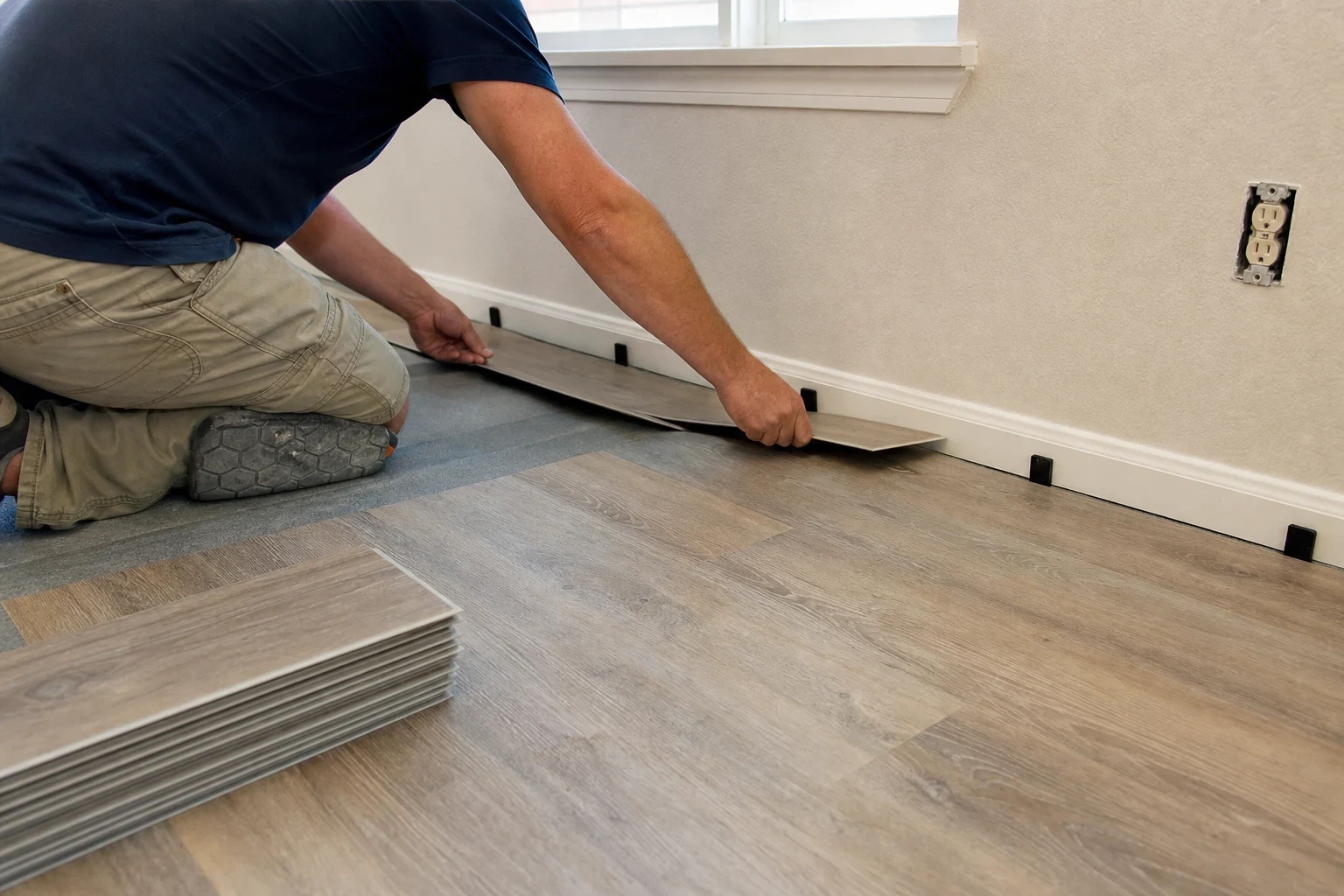
A durable floor, put back the right way
Luxury vinyl plank is a layered floor. A printed wood visual sits under a clear wear layer, fused to a rigid core of stone-plastic or wood-plastic composite. The planks click together and float over the subfloor, so they go down quickly and can be lifted again if something ever goes wrong beneath them.
The planks resist water. The slab or plywood underneath does not, and that is where most failed vinyl floors begin. After a burst supply line or a storm leak, we look below the surface first, because new planks laid over a damp slab can trap moisture and grow mildew where no one sees it.
It suits kitchens, laundry rooms, baths and busy living areas. If you want solid wood, our Hardwood Flooring page covers that, and Luxury Vinyl Tile offers the same construction in a stone or tile look.
What the work includes
- Removing the damaged floor
- We take up wet carpet and pad, swollen laminate or lifted vinyl, along with any underlayment. Baseboards and quarter round come off carefully so sound pieces can go back on.
- Moisture readings, with photos
- We take meter readings across the slab or wood subfloor and photograph what we find. If it is not dry enough, we tell you plainly and wait rather than cover it up.
- Leveling the base
- Rigid planks want a flat base, usually no more than about 3/16 inch of variation across a 10-foot span. Ridges get ground down and dips get filled with patching or self-leveling compound. That keeps the locking joints from flexing and pulling apart as the years go by.
- Vapor barrier and underlayment
- Over concrete we lay a vapor barrier or an underlayment with one built in, matched to what the plank manufacturer calls for.
- Installation and trim
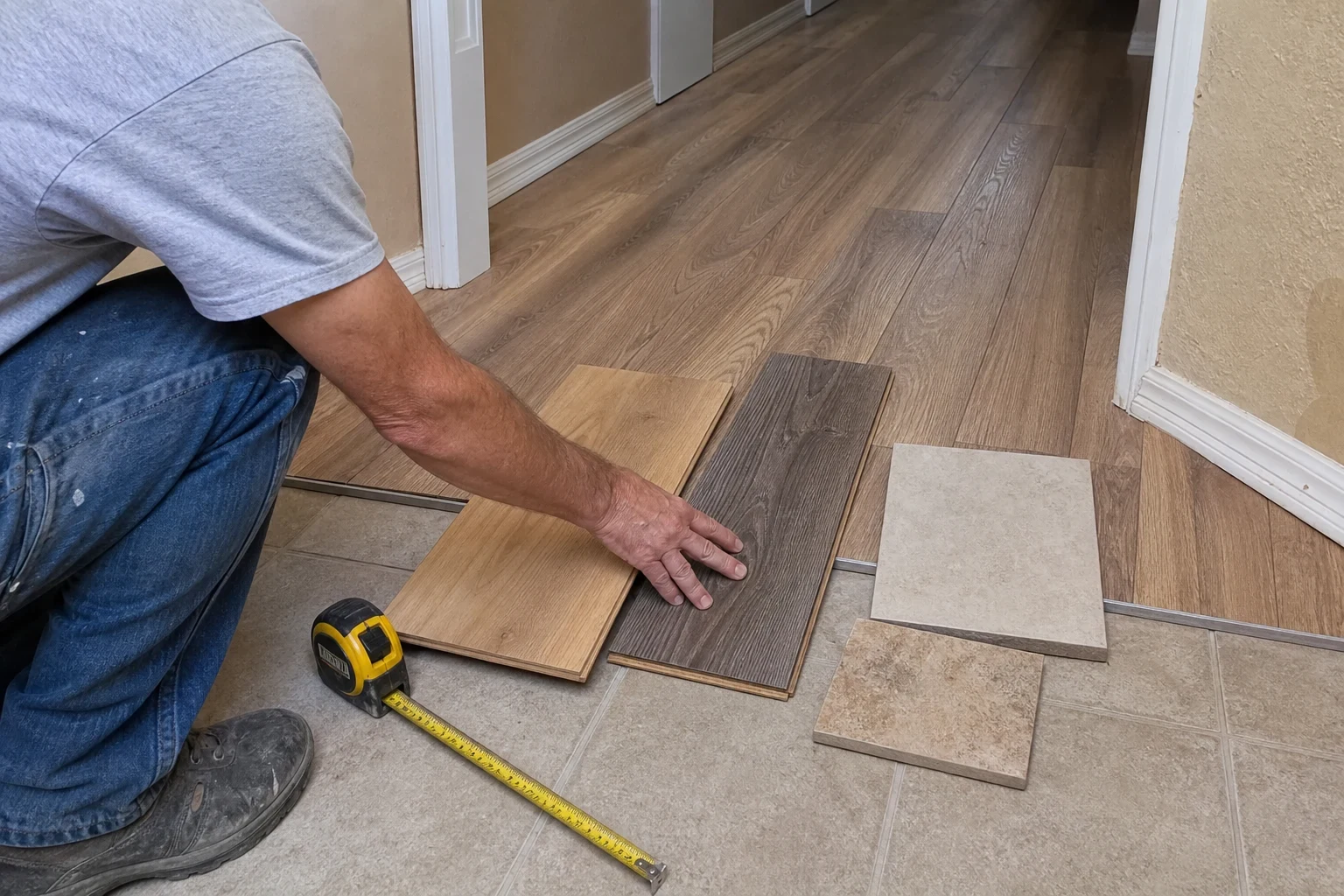
- Planks go down with proper expansion gaps at the walls. Door jambs are undercut so the floor slides beneath them, and transitions are fitted where the vinyl meets tile or carpet.
- Cleanup
- We haul away the old flooring and debris and vacuum each room before we leave.
Signs it is time for new plank flooring
Swollen or cupped laminate
Laminate has a fiberboard core that soaks up water at the edges. Once the seams have peaked or the boards have cupped, they will not flatten again.
Carpet that smells musty after getting wet
When pad stays damp for more than a day or two, mildew usually follows. Drying the carpet surface rarely clears what is underneath.
Soft or stained spots near water sources
Discoloration or give in the floor beside a tub, dishwasher, water heater or exterior door points to a slow leak that has already reached the subfloor.
An older floating floor that has gapped
Open joints or a floor that clicks and shifts underfoot often mean the base was never leveled. A new floor over the same base will fail the same way.
Getting ahead of storm season
If your current floor would not survive a wet entryway or an overflowing washer, moving to a water-resistant plank in spring is a calm, planned job instead of a rushed one in August.
What shapes the cost
Two plank floors of the same size can price quite differently, mostly because of what lies beneath them. We measure and test before quoting so the estimate reflects your actual rooms. The written estimate shows each of these items separately.
Square footage and layout
Open rooms go quickly. Closets, angled walls, hallways and many doorways add cuts and time.
Subfloor condition
A dry, flat slab needs little work. Leveling compound, grinding or waiting out a damp slab after water damage all add to the job.
The plank itself
Wear layer thickness, core type and plank length all move the material cost. A thicker wear layer holds up better to pets and heavy traffic.
Removal and extras
Taking out and disposing of the old floor, moving appliances, new baseboards and transitions are priced as their own lines. Steps are handled through our Stair Flooring service.
How a plank job runs
- 1
A phone call, then a visit
We ask what happened and when, then set a time to measure, test moisture and look at the subfloor in person.
- 2
A written estimate and the paperwork you need
You get an estimate broken out line by line, along with our photos and moisture readings. If you are filing an insurance claim, that record helps when you talk with your adjuster. We explain the flooring side clearly, but the adjuster makes the coverage decisions.
- 3
Acclimation and prep
The planks rest in your home for the time the manufacturer specifies, with the air conditioning running. We remove the old floor, recheck moisture and level the base.
- 4
Installation day
We protect cabinets and walls, work room by room and keep a path open so part of the house stays usable. Floating planks can be walked on as soon as each room is finished.
- 5
Walkthrough
We go over the floor with you, show you the transitions and trim, and explain how to clean the wear layer without dulling it.
Questions about luxury vinyl plank
Is luxury vinyl plank really waterproof?
The planks are, and spills or standing water on top will not harm them. Water that gets underneath through the walls or seams is a different matter, since it can sit on the subfloor with no way to dry. That is why we check moisture and lay a vapor barrier over concrete.
Can the planks be saved after a leak?
Sometimes. Because click-lock planks float, we can often lift them, let the subfloor dry and relay the sound ones. If the water was dirty, or the planks are warped or the locking edges are damaged, replacement is the better answer, and we will tell you which you have.
Can you install it over my existing tile?
In many cases, yes, provided the tile is firmly bonded and flat. Deep or wide joints get a skim coat first, because over time their outline can press up through the vinyl and show on the surface. Loose or cracked tile has to come up. Laying over tile also adds height, so we check door clearances and appliance fit before recommending it.
How does it hold up to dogs and kids?
A plank with a thicker wear layer resists scratches well, though no floor is scratch-proof. Felt pads on furniture and trimmed nails help. Unlike wood, it will not stain from pet accidents if they are cleaned up.
How long will the work take?
Many average rooms are finished in a day once the planks have acclimated. Leveling work or a slab that still needs to dry adds time, and we give you a realistic schedule at the visit rather than a rushed one.
Ready to get your floors back?
Tell us what happened and which rooms took on water. We will come out, look beneath the surface and put together a written estimate you can read line by line.