ServicesLaminate Flooring
Laminate Flooring in Jersey Village
When a leak or storm water gets under laminate, the boards rarely recover. We take up the ruined floor, confirm the slab is dry, and lay new planks on the right underlayment so the room looks settled and finished again, not patched.
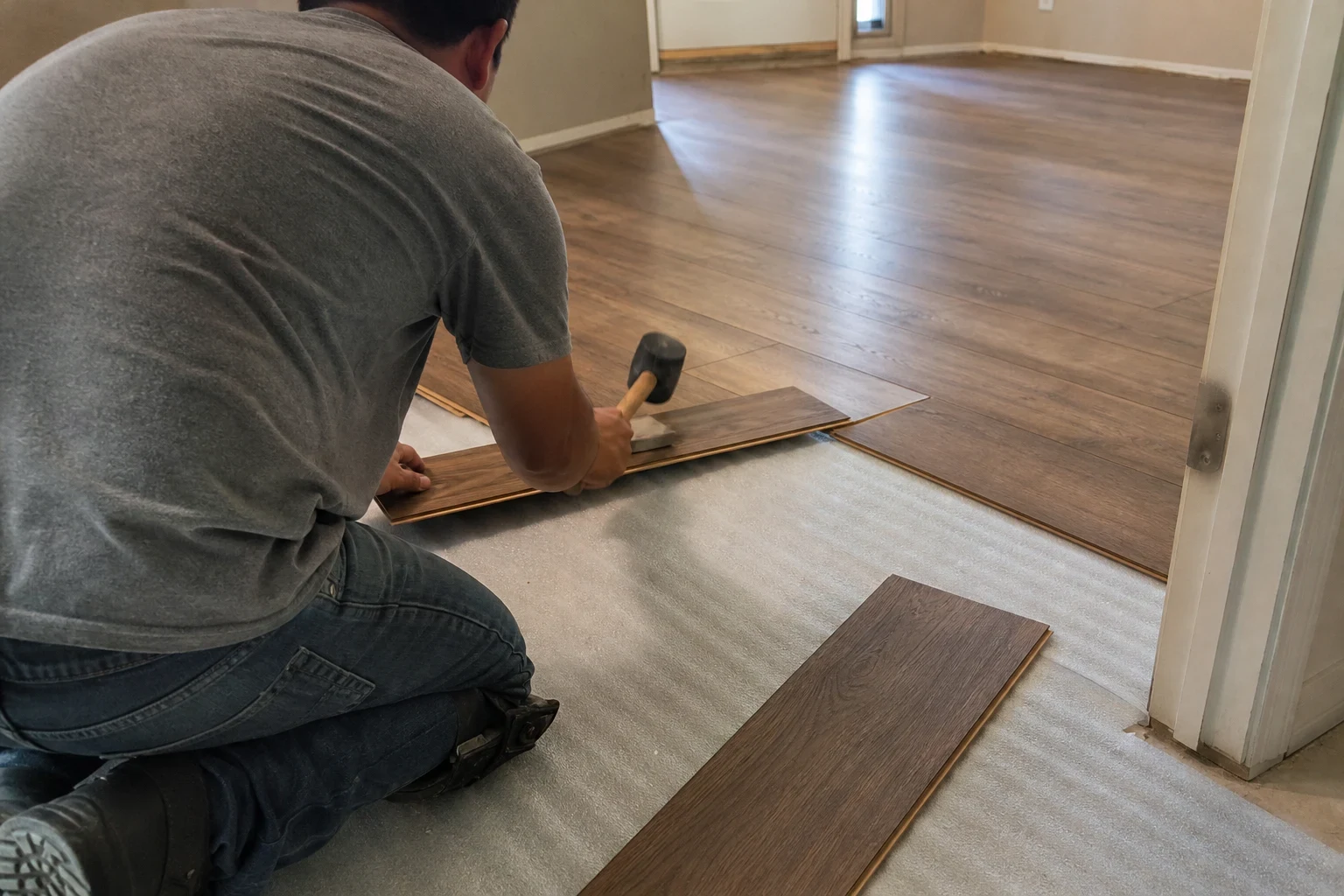
When Laminate Is the Right Floor to Put Back
Laminate is a photographic wear layer pressed onto a dense fiberboard core. That core is what makes it affordable and stable, and it is also its weak point. Once water reaches the joints, the fiberboard swells, edges lift, and the planks do not dry back flat.
After a sudden leak or storm, our first job is a sensible answer. Some rooms are better suited to luxury vinyl plank, which tolerates water far better. For bedrooms, living rooms and halls away from the wettest areas, a good laminate with sealed joints gives you a warm wood look, a hard-wearing surface and a quick install.
Most homes here sit on concrete slabs, so we treat moisture under the floor as seriously as the boards on top.
What the Work Includes
- Removal of the old flooring
- We take up swollen planks and the old underlayment, bag the debris and haul it away. Baseboards and quarter round come off carefully so they can go back on if they are sound.
- Moisture check on the slab
- We test the concrete before anything new goes down. If readings are high, we tell you plainly and wait rather than seal wet concrete under a new floor.
- Flattening the surface
- Laminate needs a flat base to lock properly. We grind high spots and fill low ones so the joints are not stressed and the floor does not flex underfoot.
- Vapor barrier and underlayment
- On slab we use a moisture barrier with a padded underlayment, which quiets footsteps and protects the core from vapor rising through the concrete.
- Installation and trim
- Planks are laid with an expansion gap at every wall, then finished with transitions at doorways and reinstalled or new trim.
Signs Your Laminate Needs Replacing
Peaked or lifted edges
Raised seams between boards usually mean the core has absorbed water. It will not shrink back.
A soft or hollow feel
Spongy spots can point to a swollen core, failed underlayment or a dip in the slab beneath.
Musty smell near the floor
Trapped moisture under a floating floor can hold odor long after the surface looks dry. Lifting a board tells us what is happening.
Gaps that keep opening
Separating joints often follow a wet-dry cycle or a missing expansion gap. Either way, the locking edges are already worn.
How a Laminate Job Runs
- 1
Look and document
We visit, lift a board or two and photograph what we find, including the slab. If you are filing an insurance claim, those photos help you explain the damage, though the adjuster makes the coverage decision.
- 2
Choose the plank
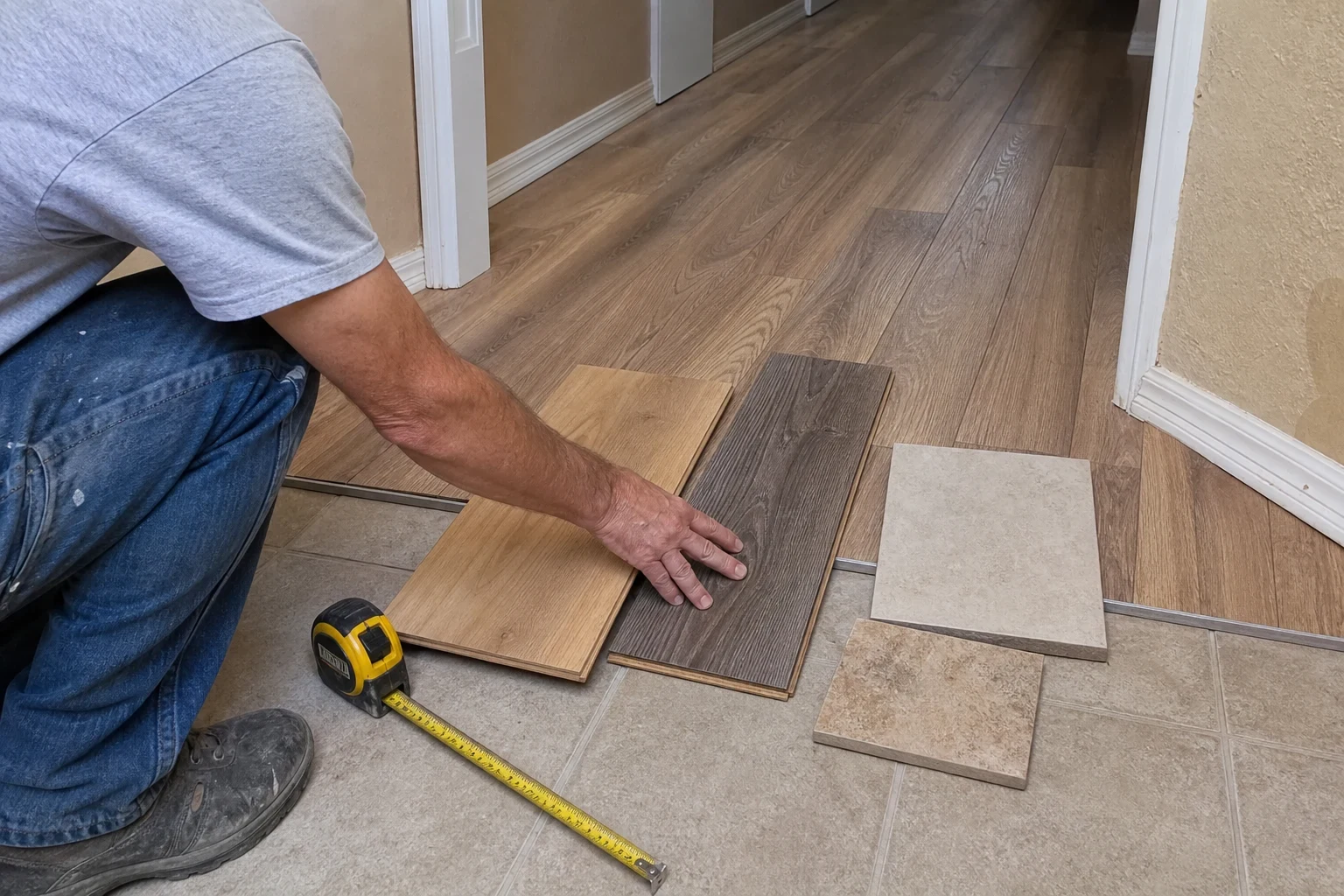
We walk you through thickness, wear rating and water-resistant options, and bring samples so you can see the color in your own light.
- 3
Prepare the room
Planks rest in the house to adjust to indoor humidity. On install day we protect doorways and nearby floors, then remove the old flooring and prep the slab.
- 4
Install and clean up
Most rooms are laid in a day or two. We reset trim, vacuum and walk the floor with you before we leave.
What Shapes the Cost of Laminate
Every quote starts with what is under the old floor, not just the square footage. We explain each line by phone and in person so you know where the money goes. Moisture or slab problems found during removal are raised with you before we do any extra work.
- Square footage and layout
- Open rooms go quickly. Closets, angled walls and many doorways mean more cuts and more trim.
- Plank grade
- Thicker boards, higher wear ratings and water-resistant cores cost more but hold up better in busy or damp-prone areas.
- Removal and slab prep
- Glued flooring, tile underneath or an uneven slab takes more labor than pulling up a floating floor.
- Matching continuous rooms
- Laminate often runs unbroken through several rooms. If the original style is discontinued, the whole connected area may need new flooring for a consistent look.
Laminate Flooring Questions
Something not covered here? (346) 588-7323
Can you replace only the boards that got wet?
Sometimes, if the problem is small and you have matching spare planks. Because laminate floats as one connected sheet, boards often have to come up from the wall to reach the affected area. We look first and tell you honestly whether a partial repair will blend in.
How long does the slab need to dry before new laminate goes in?
It depends on how much water soaked in and how humid the house has been. We test rather than guess. Laying new flooring over damp concrete is the fastest way to repeat the problem.
Will my insurance pay for new laminate?
That is up to your policy and your adjuster. What we can do is document the damage with photos, explain what we found under the floor, and give you a clear written scope to share with them.
Is water-resistant laminate worth it?
For kitchens, entries and rooms that have flooded before, usually yes. It resists surface spills far better, though no laminate is built to sit in standing water. For truly wet areas, we may suggest luxury vinyl plank or tile flooring instead.
Do I need to empty the room?
Clearing small items and breakables helps. Talk to us by phone about larger furniture and we will plan how it gets moved and set back.
Ready to Put a Finished Floor Back
Tell us what happened and which rooms were affected. We will set a time to look at the floor and the slab and talk through your options.