ServicesTile Flooring
Tile Flooring in Jersey Village After a Leak or Storm
When water gets under a tile floor, the tile often looks fine while the grout, setting bed and slab tell a different story. We remove what has failed, let the floor dry properly, and set new porcelain or ceramic tile so the room is usable again without a rushed patch.
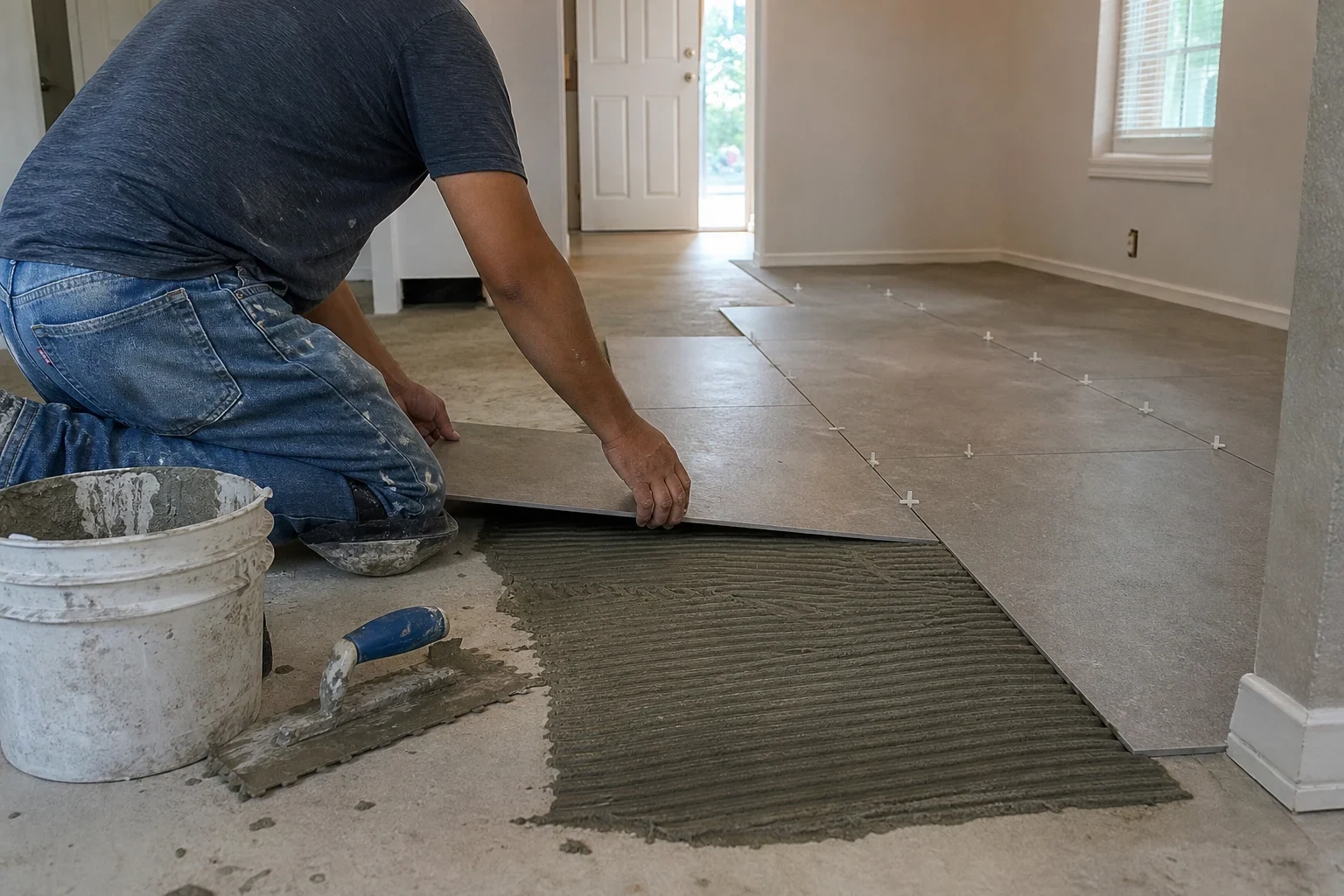
When tile is the right call
Porcelain and ceramic tile handle water better than almost any floor we install. That is why many homeowners choose tile for kitchens, baths, laundry rooms and entries after a leak or storm has ruined carpet, laminate or wood. The tile itself rarely rots or swells. What fails is underneath: thinset that has let go, grout that has soaked up dirty water, or a slab that moved and cracked a row of tiles.
Most homes around Jersey Village sit on concrete slabs, so our first job is the slab, not the tile. We check it for moisture, cracks and flatness before anything new goes down, because tile set over a wet or uneven slab will crack again.
If tile is not the best fit for a room, we say so. Luxury vinyl plank or luxury vinyl tile can be the quicker answer for a bedroom, and we are glad to talk through the options with you.
What our tile work includes
Inspection with photos
We tap for hollow spots, lift a suspect tile where it makes sense and take moisture readings on the slab. You get photos of what we found and a plain answer on whether a partial repair will hold or the room needs new tile.
Removal and haul-off
Old tile, mortar and soaked underlayment come out with dust control in place. We protect doorways and neighboring rooms, and the debris leaves with us.
Slab prep and crack isolation
We grind high spots, fill low ones and lay a crack isolation membrane where the slab has moved. This quiet step decides how long the new floor lasts.
Setting and grout
Porcelain, ceramic or natural stone goes down in the thinset suited to its size and weight. We plan the layout so cut pieces land at the walls, not in the middle of the room, and choose grout color with you on site.
Transitions and baseboards
Clean, level transitions to carpet, wood or vinyl in the next room, with baseboards and quarter round reset or replaced.
Paperwork for your claim
If you have an insurance claim open, we provide a written line-item estimate and photos your adjuster can follow. We explain the process, and the claim decisions stay between you and your insurer.
Signs your tile floor needs attention
A hollow sound underfoot
Tap a tile with the handle of a screwdriver. A dull, hollow note means the tile has come loose from the thinset, often after water sat beneath it.
Grout that stays dark
Grout that stays darker than the rest of the floor long after a spill, or crumbles under a fingernail, is holding moisture.
Cracks that follow a line
Several tiles cracked along the same path usually trace a slab crack below. Swapping only those tiles brings the crack right back.
A musty smell after a storm
Water that came in under a door or through a wall can sit under tile for weeks. A smell that lingers is worth a moisture check.
Tiles lifting at the edges
Tiles that rise or tent at their edges have pulled free of the mortar and can chip or trip someone. Keep traffic off them until the floor is looked at.
How a tile job runs
- 1
A first phone conversation
Tell us what happened and which rooms are affected. We set a time to see the floor and ask whether a claim is open so our paperwork lines up with it.
- 2
Inspection and written estimate
We test the slab, look over the affected area and walk you through the photos. The estimate lists removal, prep, materials and installation on separate lines.
- 3
Drying and preparation
We do not set tile on a damp slab. If readings are high we wait and test again, then flatten and seal the surface for the new floor.
- 4
Installation
A kitchen or bath usually spans a few days, because thinset and grout each need time to cure. We keep the work area closed off and the rest of your home clean.
- 5
Cleanup and walkthrough
We remove grout haze, seal the grout where the material calls for it and walk the floor with you. You will know when furniture and appliances can go back.
What shapes the price of tile flooring
Tile pricing depends more on what lies under the old floor than on the tile you pick. After the inspection you get a written estimate with each part of the job on its own line, so nothing appears later as a surprise.
- Condition of the slab
- A dry, flat slab needs little work. Cracks, low spots or lingering moisture add grinding, leveling and membrane time.
- Tile size and material
- Large-format porcelain needs a flatter surface and more careful setting. Natural stone needs sealing and gentler handling.
- Removing the old floor
- Tile set in a thick mortar bed is heavy, slow work to remove. Carpet or vinyl comes up far more easily.
- Layout and room shape
- Herringbone, diagonal patterns and rooms with many cabinets or corners mean more cuts and more labor.
Tile flooring questions
Something not covered here? (346) 588-7323
Can you replace only the damaged tiles?
Sometimes. If the slab is sound and you have spare tiles, or the tile is still made, a partial repair can work well. If the tile is discontinued or water spread under a wide area, a patch tends to stand out or fail, and we will tell you that plainly.
How long does the slab need to dry after a leak?
There is no fixed number. It depends on how long water sat, the time of year and whether fans or dehumidifiers ran. We measure moisture and set tile only once the readings are where they should be.
Will my insurance pay for new tile?
That depends on your policy and the cause of the loss, and your adjuster makes that call. We provide a clear line-item estimate and photos so the adjuster can see exactly what failed and why.
Is porcelain better than ceramic for a kitchen?
Porcelain is denser and absorbs very little water, so it holds up well in kitchens, baths and entries. Ceramic is a fine choice for lighter-traffic rooms and walls. We bring samples of both so you can see the finish in your own light.
Can new tile go over the old floor?
Over sound tile that is still firmly set, it is sometimes possible. After a leak or flood we nearly always remove the old floor, because the problem is usually underneath and covering it only hides it.
Get the floor back under your feet
Tell us what happened to the floor and which rooms are involved. We will explain what the inspection looks for and what the next step is.