ServicesLuxury Vinyl Tile
Luxury Vinyl Tile in Jersey Village
When a leak or storm has ruined the floor in a kitchen, bath or entry, luxury vinyl tile gives you the look of stone or ceramic in a material that shrugs off spills and wet shoes. We test the slab, pull the wet flooring and lay the new tile once it is truly dry.
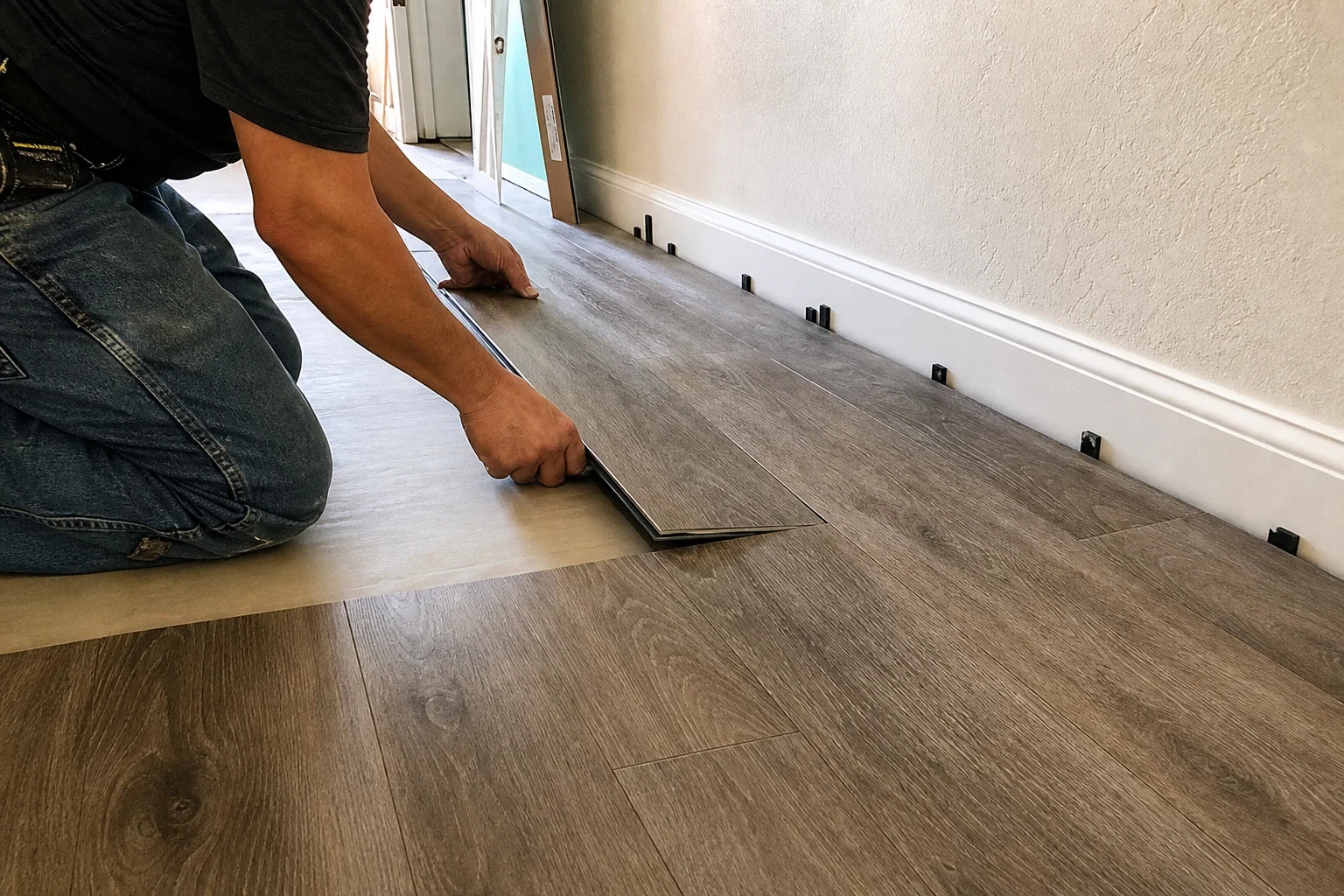
A Stone Look That Handles Water Calmly
Luxury vinyl tile, often called LVT, is a layered vinyl product cut into square or rectangular tiles rather than long planks. A printed image of slate, travertine, marble or ceramic sits under a clear wear layer, so you get the pattern and scale of real tile without cold, hard grout lines or the weight of stone.
It is often the right call after sudden damage. If a supply line burst under the sink or rain came in under a door, the replacement floor should tolerate the next spill. LVT does, and it installs far faster than ceramic, so your home is back in use sooner.
The tile itself resists water. What sits under it matters more. Most homes here are built on concrete slabs, and a slab that still holds moisture from a flood can trap it beneath a new floor. That is why our work starts below the surface, with a moisture reading before any tile is opened.
What Our Luxury Vinyl Tile Work Includes
- Removal of the wet floor
- We take up the soaked or warped floor, the underlayment and any tack strip or adhesive residue that would telegraph through the new tile. We photograph what we find underneath so you have a clear record.
- Slab moisture testing
- We take moisture readings on the concrete and compare them to the limits the tile manufacturer sets. If the slab is still damp, we tell you plainly and wait rather than lay over it.
- Leveling and surface prep
- Vinyl shows every dip and ridge. We grind high spots and fill low ones with patching or self-leveling compound so the tile sits flat and the edges stay tight.
- Floating or glue-down installation
- Rigid-core click tiles float over the slab with an expansion gap at the walls. Flexible tiles are glued down for a firm, quiet feel. We explain which suits your rooms and how you use them.
- Trim, transitions and cleanup
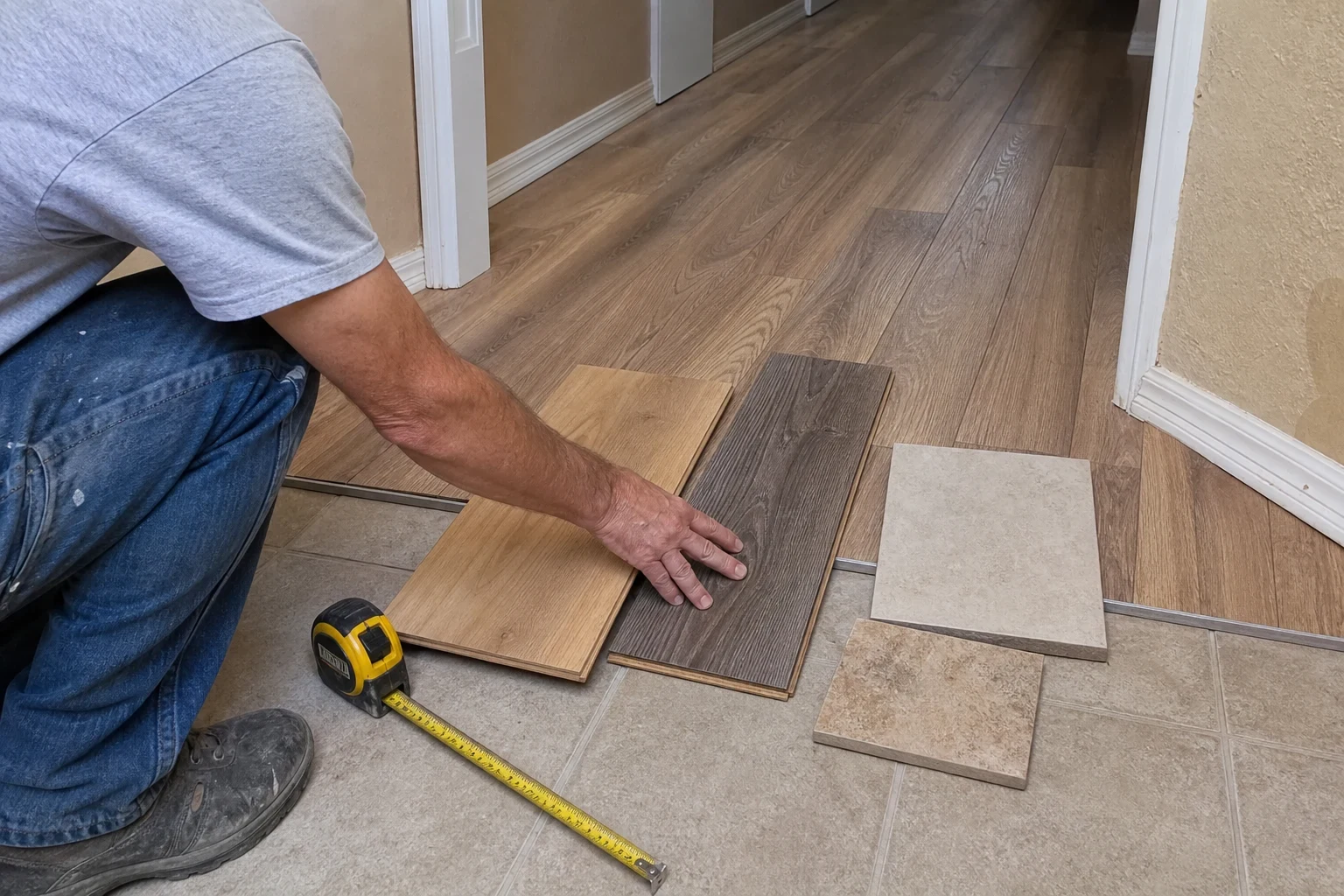
- We reset or replace baseboards, fit transitions to carpet or hardwood, and undercut door jambs so the tile slides beneath cleanly. Scraps and old flooring leave with us.
Signs It Is Time for New Vinyl Tile
Cupped or lifting floor after water
Laminate and older vinyl swell or curl once water gets into the seams. If edges have lifted since a leak, the floor will not settle back down.
A musty smell near the floor
Odor that lingers after a storm or plumbing leak can point to moisture trapped under the old flooring. That needs to come up and dry out.
Cracked ceramic tile or loose grout
Hollow-sounding or cracked tiles let water reach the slab. LVT is a lighter, warmer replacement that still keeps a tile look.
Worn, dated sheet vinyl
Faded patterns and torn seams in a kitchen or laundry room are easy to replace with tile-format vinyl that holds up to daily traffic.
Stains in high-traffic wet areas
Entries, mudrooms and baths that see wet shoes and towels benefit from a floor that wipes clean and does not absorb water.
What Shapes the Cost of Luxury Vinyl Tile
Every estimate depends on what we find once the old floor is up. Two rooms of the same size can price differently because of the slab beneath them. We itemize each part so you can see where the money goes.
Tile thickness and wear layer
A thicker wear layer resists scratches from pets and grit longer. Rigid-core tiles and products with groutable edges cost more than thinner glue-down tiles.
Condition of the slab
Cracks, high spots or old adhesive add grinding and leveling time. A slab that needs a moisture barrier adds material.
Removal of the old floor
Pulling glued vinyl or ceramic tile takes more labor than lifting carpet or a floating floor. Water-soaked materials also take more care to remove.
Room shape and pattern
Bathrooms, closets and kitchens with islands need many cuts. A diagonal or herringbone layout uses more tile and more time than a straight grid.
How a Luxury Vinyl Tile Job Runs
- 1
A phone conversation first
You tell us what happened, which rooms are affected and whether the source of the water has been fixed. We set a time to see the floor in person.
- 2
Inspection and written estimate
We look over the floor, take moisture readings and measure each room. You receive a line-item estimate covering removal, prep, materials and installation.
- 3
Drying and tear-out
If the slab needs time, we wait for readings to come down before going further. Once it is dry, we remove the old floor and protect cabinets, doorways and nearby rooms from dust.
- 4
Prep, acclimation and install
The tile rests in your home to adjust to indoor temperature and humidity while we level the slab. Before the first tile goes down, we plan the layout so the partial pieces along opposite walls end up the same width and the room reads as even.
- 5
Walkthrough and cleanup
We walk the finished floor with you, check transitions and trim, vacuum and wipe down the room, and go over simple care for the wear layer.
Luxury Vinyl Tile Questions
What is the difference between luxury vinyl tile and luxury vinyl plank?
The materials are the same family. Tile comes in squares or rectangles printed to look like stone or ceramic, while plank is long and narrow to look like wood. If you prefer a wood look, our Luxury Vinyl Plank page covers that option.
Is luxury vinyl tile waterproof?
The tile does not absorb water, and spills sit on the surface until you wipe them. Standing water from a flood can still seep through seams and reach the slab, so after a major event the floor may need to come up so the concrete can dry.
Will my insurance pay for the new floor?
That depends on your policy and the adjuster's decision, not on us. We can provide photos of the damage, moisture readings and a line-item estimate you can share with your insurer, and we are glad to explain what each line means.
Can you install it over my existing ceramic tile?
Sometimes. If the old tile is solid, flat and dry, a floating LVT can go over it after we fill the grout lines. If tiles are cracked, hollow or water has gotten under them, we recommend removing them first.
How soon can we use the room?
Floating tile can be walked on as soon as it is laid. Glue-down tile usually needs a short wait before heavy furniture goes back, and we will tell you the time the adhesive maker specifies.
Ready for a New Floor After Water
Tell us what happened and which rooms took the water. We will set a visit, check the slab and put together a clear estimate for new luxury vinyl tile.